9 Ball Soft Break: How a Controlled Break Works and When to Use It
Quick answer: A soft break in 9 ball is a controlled break where you hit the rack with less than full power. The idea is to keep the cue ball under control, often near the center of the table, while still getting the balls to spread and, with luck, pocketing a ball. Many players find that a controlled, well hit break works better than a wild hard break. Some rules require a certain number of balls to reach the head string or a rail on the break, so check your rules before you try a very soft break.
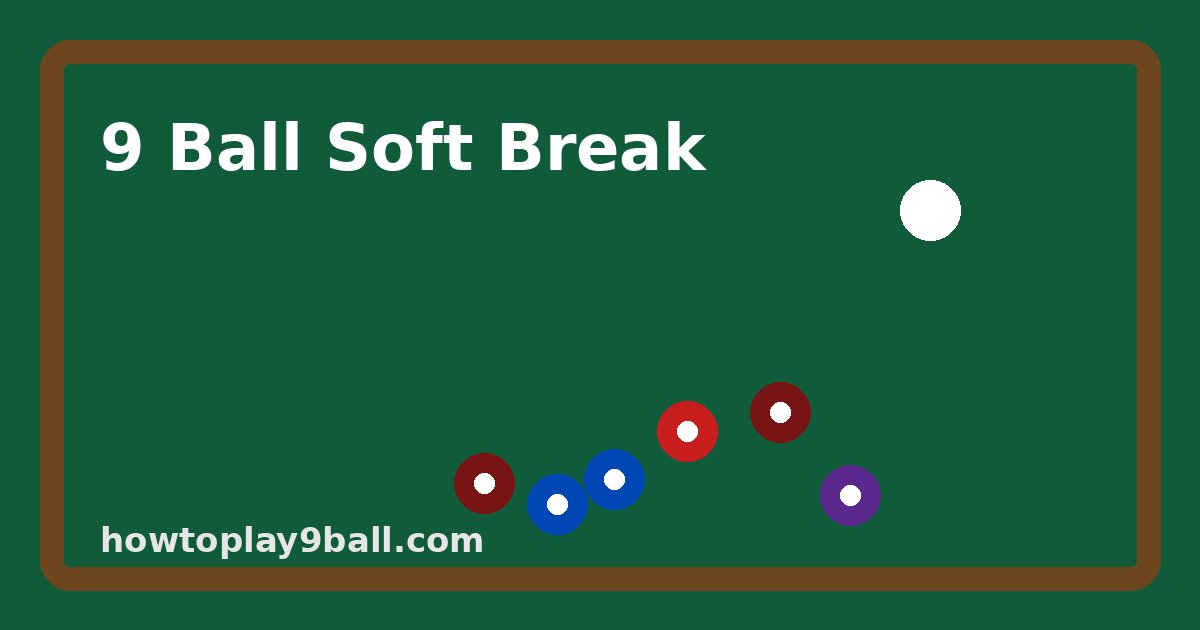
A big break looks fun. A smart break often wins more racks.
Why Players Use a Soft Break
- Control. A softer hit makes it easier to hit the head ball square and keep the cue ball near the center.
- Fewer scratches. A cue ball that flies around the table is more likely to scratch or jump off the table.
- A better first shot. If the cue ball stays in the middle, you have a better chance of seeing the 1 ball.
- Repeat it. A controlled break is easier to do the same way every time, so you can learn what works on your table.
How to Hit a Soft Break
- Get a tight rack. A tight rack matters more than power. See how to rack 9 ball.
- Pick your spot. Many players break from near the side rail. Others break from the center. Try both.
- Aim at the 1 ball, full and square. A square hit sends energy through the rack.
- Use a smooth stroke at medium to firm speed. Not soft as a lag, and not full power.
- Hit the cue ball at center or just below. This can help the cue ball stop or come back a little near the middle.
- Stay down. Keep your head still through the hit.
What Good Results Look Like
- The cue ball ends near the center of the table.
- The balls spread out and open the table.
- A ball goes in, often the wing ball or a corner ball.
Even if nothing goes in, a good spread and a centered cue ball are a win.
Rules on the Break
Many 9 ball rules have a break rule. For example, some rules say that if no ball is pocketed, a set number of object balls must reach the head string or hit a rail. If you break too soft, it may be called a foul or a bad break. Rules change by league, by event, and by bar. Always ask before you play. You can also read our guide on how to break in 9 ball and 9 ball rules for beginners.
Soft Break vs Hard Break
| Break | Strengths | Weak spots |
|---|---|---|
| Soft or controlled | Cue ball control, fewer scratches, easy to repeat | May not spread the balls as much |
| Hard | Big spread, more balls may move | Harder to control the cue ball, more scratches |
Most players end up somewhere in the middle. They use the most power they can control.
How to Practice the Soft Break
- Rack ten times and break with medium firm speed.
- Mark where the cue ball stops each time.
- Count how many breaks leave a shot on the 1 ball.
- Change your break spot and repeat.
Track your results so you learn what works on your table.
Key Points
- A soft break trades some power for control.
- A tight rack and a square hit matter most.
- Keep the cue ball near the center.
- Check your rules on the break before you go too soft.
Keep Reading on This Site
- 9 Ball Kick Shots: How to Hit the Lowest Ball When You Are Hooked
- 9 Ball Strategy for Beginners: 8 Simple Ideas to Win More Racks
- How to Rack 9 Ball: A Simple Step by Step Guide
- 9 Ball Pattern Play: How to Plan Your Run From the 1 to the 9
- How to Play 9 Ball Pool: 6 Easy Steps and Key Rules
- 9 Ball Combination Shot: How to See It and Make It in 5 Steps
Frequently Asked Questions
What is a soft break in 9 ball?
It is a controlled break with less than full power that aims to keep the cue ball near the center while still spreading the balls.
Is a soft break legal in 9 ball?
Usually, but many rules require a certain number of balls to reach the head string or a rail if no ball goes in. Check your rules.
Where should I break from for a soft break?
Many players break from near the side rail, and others from the center. Try both and track your results.
Does a soft break pocket balls?
It can. A square hit on a tight rack often pockets a wing or corner ball even without full power.
Is a soft break better than a hard break?
Not always. Many players find that the most power they can control works best for them.